Punjab Government Plans Action Against Teachers Over Poor Matric Results
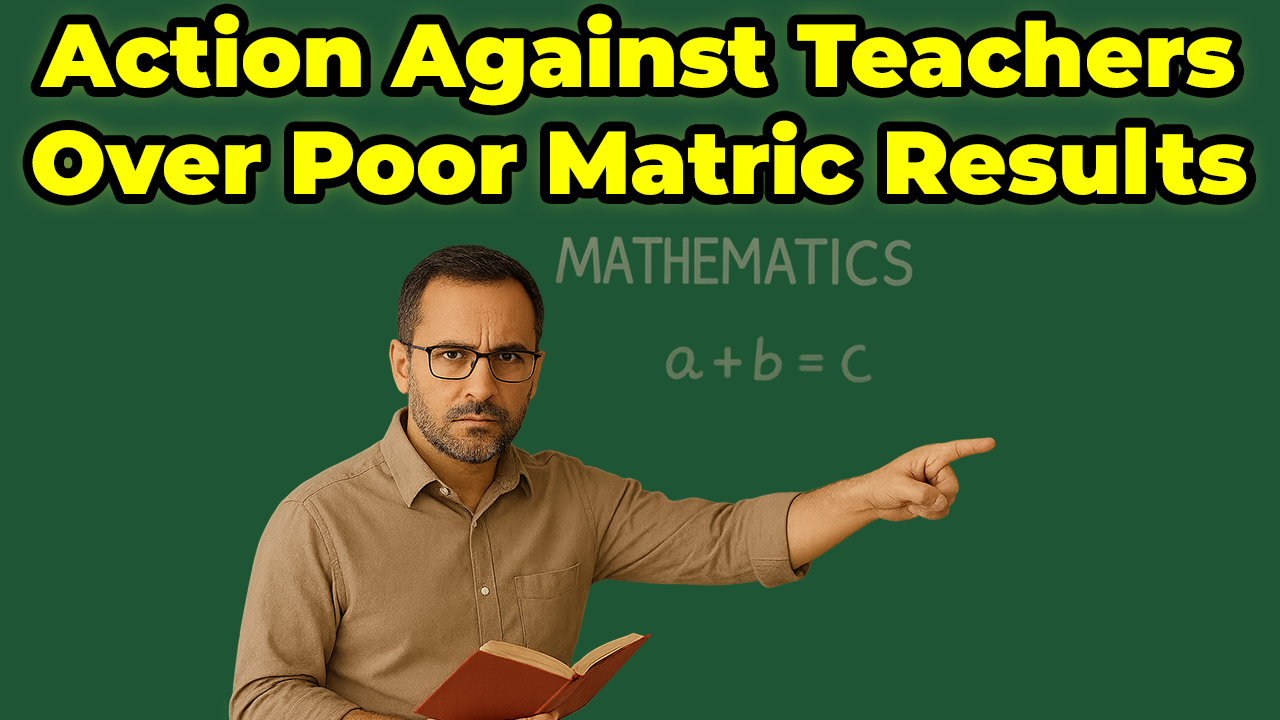
The Punjab government has recently announced strict measures against teachers in public schools who have shown poor performance in the recent matric (10th class) examination results. This step has sparked a major debate in the education sector, raising concerns over accountability and quality of education in government institutions.
Why Is the Punjab Government Taking This Step?
According to official sources, the decision comes after a detailed review of matric results across Punjab. Several schools showed alarmingly low pass percentages, and in some cases, students performed far below the national average. The provincial education department believes that ineffective teaching and lack of commitment are major factors contributing to this problem.
“Teachers are being paid to ensure students get quality education. Those failing to deliver will have to face strict consequences.”
What Does the Action Include?
The government has indicated that:
Teachers with the poorest results may face termination.
Strict performance audits will be conducted for all teachers.
Schools will be monitored more closely to ensure improved teaching standards.
Teachers with consistently low-performing students will face disciplinary action.
This move is part of the government’s broader education reform agenda aimed at improving literacy rates and academic standards in Punjab.
Reactions from Teachers and Education Experts
While some support this decision as a necessary step to ensure accountability, others argue that the government must also address other underlying issues, such as:
Lack of resources and proper facilities in schools.
Overcrowded classrooms and teacher-student ratio imbalance.
Need for teacher training and curriculum reforms.
Teachers’ unions have expressed concern, saying that firing teachers may not solve the root causes of poor results and that systemic reforms are required.
Impact on Students and Education Quality
If implemented correctly, this move could:
Motivate teachers to improve their teaching methods.
Encourage schools to focus on student learning outcomes.
Lead to better results in future board exams.
However, experts warn that without additional support for both teachers and students, the policy could backfire and create fear rather than motivation.
Conclusion: Will This Policy Bring Change?
The Punjab government’s decision to fire underperforming teachers highlights the need for accountability in the education sector. However, a balanced approach is crucial — one that not only holds teachers responsible but also provides them with the training, resources, and support they need to succeed.
Only time will tell whether this bold step will lead to better education standards in Punjab or trigger further challenges for the teaching community.
What are your thoughts on this policy? Should teachers be held solely accountable for poor results, or does the government need to do more to support them? Share your views in the comments below.